The chemistry: what actually separates 304 from 316
Both grades are austenitic stainless steels built on the same iron–chromium–nickel foundation, and both rely on a self-healing chromium oxide passive layer for corrosion resistance. The functional difference is that 316 trades a little chromium for extra nickel and adds molybdenum.
| Element | Type 304 / 304L | Type 316 / 316L | Why it matters |
|---|---|---|---|
| Chromium (Cr) | 18.0 – 20.0% | 16.0 – 18.0% | Forms the passive oxide film — the base of all corrosion resistance |
| Nickel (Ni) | 8.0 – 10.5% | 10.0 – 14.0% | Stabilises the austenitic structure, improves formability and toughness |
| Molybdenum (Mo) | — | 2.0 – 3.0% | The decisive addition: resists chloride pitting and crevice attack |
| Carbon (C) | ≤0.08% (≤0.030% for 304L) | ≤0.08% (≤0.030% for 316L) | Low carbon prevents chromium carbide precipitation during welding |
| UNS number | S30400 / S30403 | S31600 / S31603 | Use on enquiries and MTCs to avoid grade ambiguity |
That molybdenum addition is also why 316 carries a price premium. Molybdenum and the extra nickel are both volatile-priced alloying elements, which is why the 304-to-316 spread widens and narrows through the year rather than staying fixed.
PREN: putting a number on pitting resistance
The Pitting Resistance Equivalent Number condenses grade chemistry into a single comparable figure. The standard formula is PREN = %Cr + 3.3 × %Mo + 16 × %N. Higher is better, and the number is most useful as a ranking tool rather than an absolute design limit.
| Grade | Typical PREN | Practical chloride limit | Typical use |
|---|---|---|---|
| 304 / 304L | 18 – 20 | Potable water, ambient indoor conditions | General fabrication, food, architectural, structural |
| 316 / 316L | 24 – 28 | Up to roughly 1,000 ppm chlorides | Chemical process, coastal, pharma, marine splash zone |
| Duplex 2205 (S31803/S32205) | 33 – 36 | Brackish water, moderate brine | Process tanks, heat exchangers, onshore chemical |
| Super Duplex 2507 (S32750) | 40 – 43 | Natural seawater (~19,000 ppm Cl⁻) | Subsea, desalination, offshore, aggressive brine |
Why the "L" suffix matters more than most buyers realise
When standard-carbon 304 or 316 is held in the 425–815 °C range — which happens in the heat-affected zone of every weld — chromium combines with carbon and precipitates as chromium carbide at the grain boundaries. Those boundaries are left locally depleted of chromium and become preferential corrosion sites. The phenomenon is called sensitisation, and the resulting failure is intergranular corrosion.
- ▸304L / 316L cap carbon at 0.030%, which suppresses carbide precipitation — the default choice for any welded assembly.
- ▸Dual-certified material (marked 304/304L or 316/316L) meets the low-carbon chemistry and the higher strength of the standard grade simultaneously, and is what most stockists actually hold.
- ▸321 and 347 are the stabilised alternatives: titanium or niobium ties up the carbon instead. Prefer them over the L grades for sustained high-temperature service above about 500 °C.
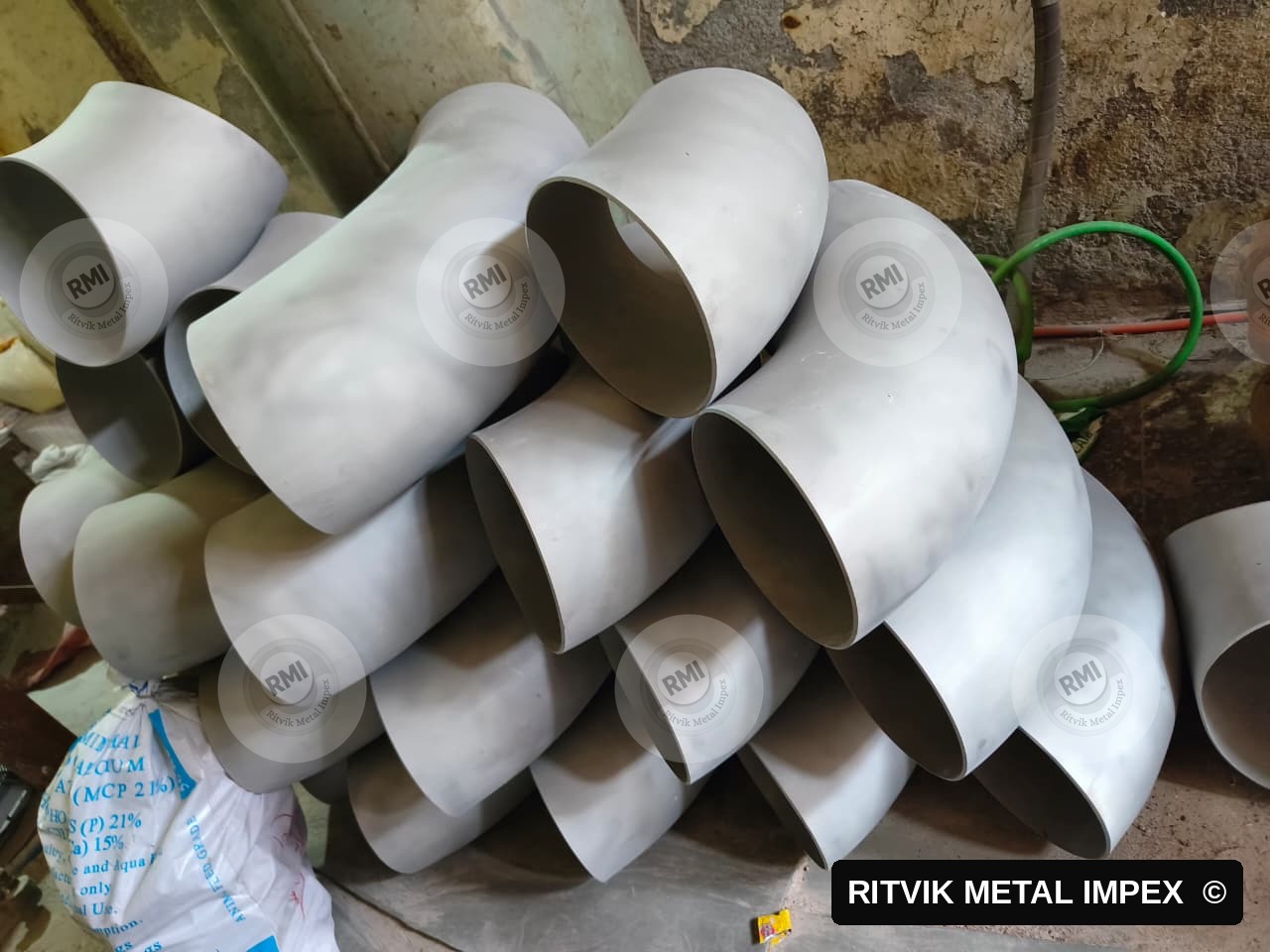
For fabricated items such as buttweld fittings and welded pipe, ask for the low-carbon or dual-certified variant unless there is a specific strength reason not to. The cost difference is marginal; the failure cost is not.
Strength and temperature: where each grade stops
| Property | 304 / 304L | 316 / 316L |
|---|---|---|
| Tensile strength (min) | 515 MPa | 515 MPa |
| Yield strength, 0.2% (min) | 205 MPa (170 MPa for L) | 205 MPa (170 MPa for L) |
| Elongation (min) | 40% | 40% |
| Max continuous service | ~870 °C | ~925 °C |
| Max intermittent service | ~870 °C | ~870 °C |
| Magnetic response | Non-magnetic annealed; slightly magnetic when cold worked | Same behaviour |
Mechanically the two grades are near enough interchangeable — you do not specify 316 for strength. 316 does retain slightly better creep and elevated-temperature strength, but if high temperature is the driver rather than corrosion, 321 (stabilised) or 310 (oxidation resistant to ~1,100 °C) are the correct answers.
A practical selection checklist
- 1Are chlorides present? Seawater, brine, coastal air, chlorinated water, many process streams and even some cleaning chemicals all count. If yes, start at 316L.
- 2What is the operating temperature? Above ~60 °C in a chloride environment, step up to duplex rather than relying on 316.
- 3Will it be welded and left as-welded? Specify the L grade or a stabilised grade (321/347).
- 4Is the item hygienic-service? Pharma, dairy and food lines almost always call for 316L with a controlled internal finish — electro-polished fittings and dairy fittings exist for exactly this reason.
- 5Is the exposure purely atmospheric and inland? 304 is very likely sufficient, and paying for 316 is money that adds no service life.
- 6Is there a stress corrosion cracking risk? Both austenitic grades are vulnerable to chloride SCC above roughly 60 °C under tensile stress. Duplex grades are markedly more resistant.
Buying either grade with confidence
Grade markings on the outside of a pipe are not proof of chemistry. When you order, insist on documentation that ties the physical material back to a heat number:
- ▸A mill test certificate to EN 10204 3.1, issued by the manufacturer's QA function, showing heat-wise chemical and mechanical results.
- ▸EN 10204 3.2 where the contract requires an independent third-party inspector to witness and countersign — expect additional cost and lead time.
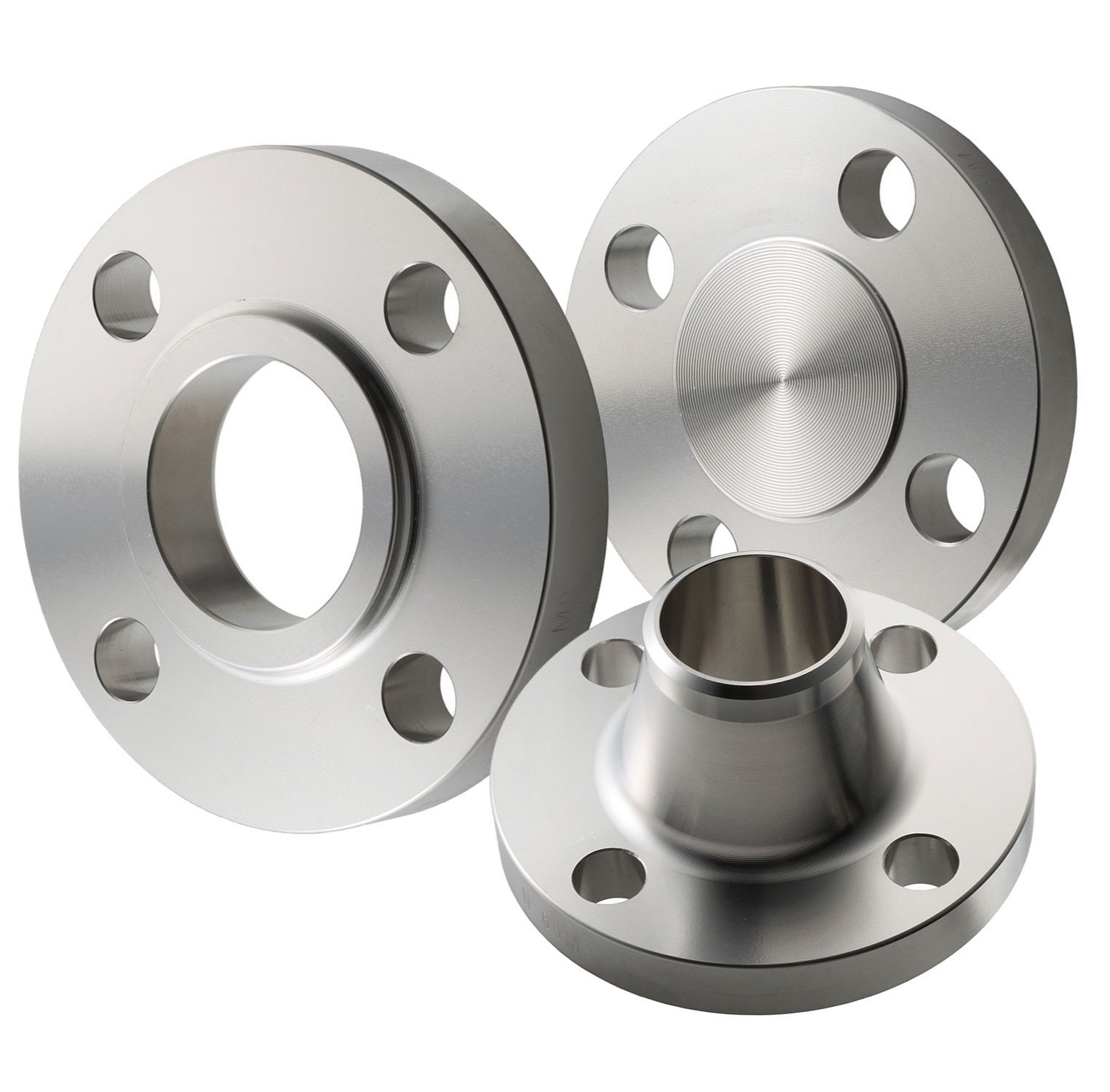
- ▸The governing product standard on the certificate: ASTM A312 for austenitic pipe, A403 for buttweld fittings, A182 for forged fittings and flanges, A240 for sheet and plate, A276/A479 for bars.
- ▸Positive material identification (PMI) on site for critical lines — a handheld XRF will separate 316 from 304 in seconds by detecting molybdenum.
Ritvik Metal Impex supplies both grades across pipes and tubes, buttweld and forged fittings, flanges, sheets, plates, coils, bars and fasteners, with mill test certificates on every consignment and third-party inspection support where the project calls for it.